Showing posts with label artifacts. Show all posts

Monday, June 21, 2010

Conservation, etc.

Once a week, the field school students take a break from fieldwork and work in the lab, cleaning and sorting artifacts. We had a lecture today on the conservation of different materials. It was over 3 hours long and every minute was fascinating. We were shown artifacts in various stages of conservation and the tools and chemicals used to clean and maintain each one. We were told that we may be able to use the airbrasion machine to clean off something during the last week of class. I hope to keep volunteering at Jamestown after field school ends, so hopefully I will be able to do a little more.

We saw the most amazing things that are not yet on display. The first was a baby's rattle (also called coral bells) made of coral and silver, with bells and a whistle on the end. The coral was for teething. Most of the coral on Preservation Virginia's rattle was gone, but it was probably broken off. There were, however, toothmarks in the whistle.
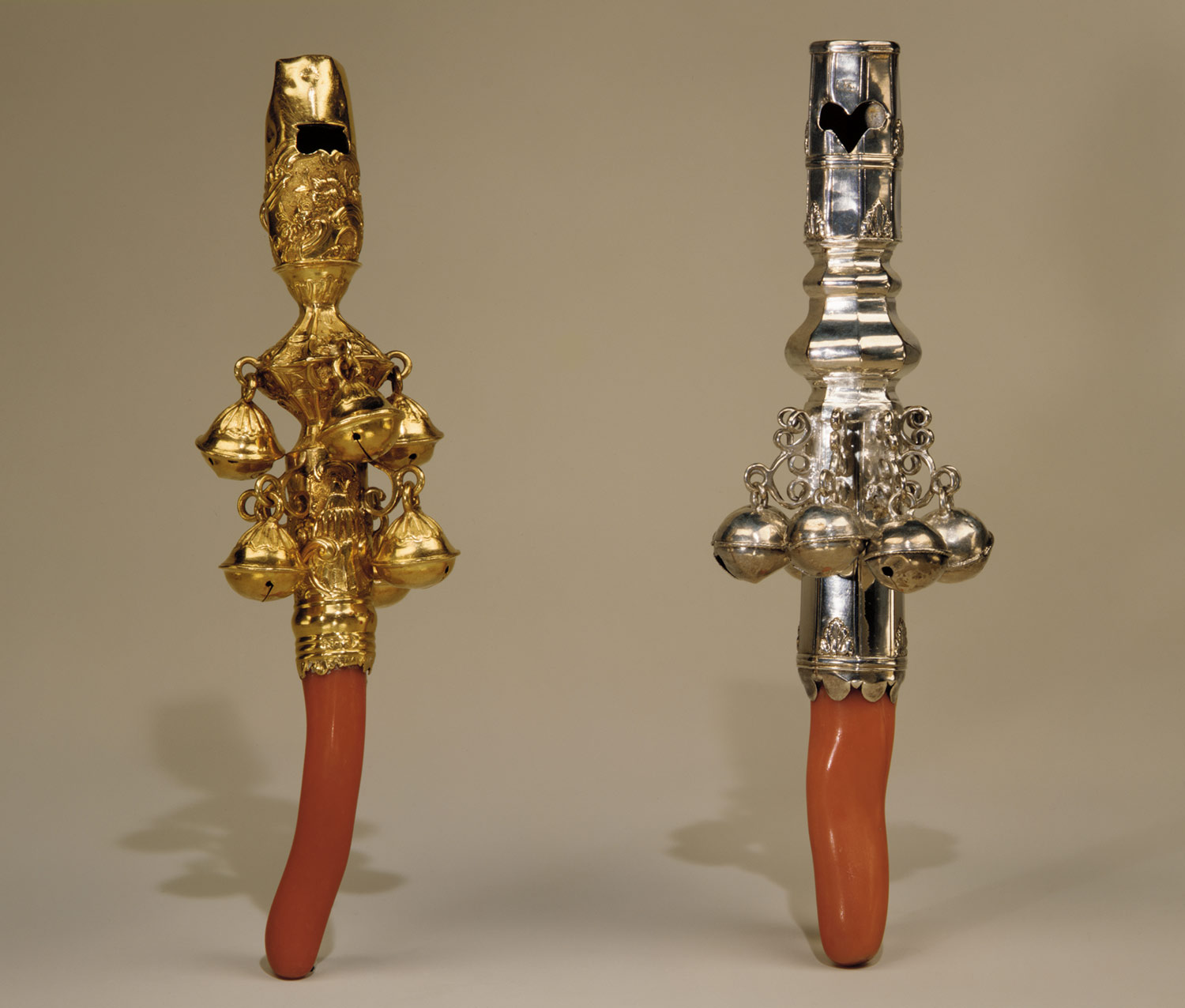
Gold coral bells from the Metropolitan Museum of Art (Source: The Metropolitan Museum of Art)

We also looked at a gold ring, inscribed with a skull and the phrase "Memento Mori," "Remember Death." I got it stuck on my finger, like a pro. I also held a human femur to examine the polyethylene glycol that was used to replace the cells damaged by water that had pooled in the grave. Pieces of bone or wood that have been PEG'd are lighter than you would expect them to be, as the substance has leeched into and filled gaps caused by decay.

We were privileged to see a piece of slate found in "the John Smith well" (called such as it was dug under the direction of John Smith). Deep scratches have been left behind on the slate, and a team of archaeologists, scientists, and experts have been trying to decode the words and images left behind. Drawings of birds and human figures cover the slate, as well as the phrase "A minion of the finest sorte."

You can read more about the slate at Preservation Virginia's website or the article by National Geographic.

I don't think conservation is the career for me, since I don't think I could handle all the chemistry classes required for it. Nevertheless, I find it to be one of the most interesting parts of the field of archaeology.

Have you found anything?

We find things all the time. I'd estimate about 4 items per bucket in my current unit, and that's pretty low for Jamestown. If you just stand by and wait, you'll probably see one of the archaeologists pluck out an artifact. It might not be anything astounding, but more likely a nail (we have found so many nails it's become a joke) or a bit of unremarkable pottery.

So far, my favorite finds have been a piece of decorated pipe stem, a bit of delft pottery with a bird painted on it, the broken blade of a sword (found near the hilt), and the beard from a Bartmann (also called Bellarmine) jug. We might start features this week, which maybe hopefully could include a modern-looking grave, and we've just started an off-site dig at Smith's Fort in Surry, so there will be more to come.

Delft ceramics are Dutch in origin. They can be identified by the blue and white paintings in the style of Chinese porcelain. (Source)

Bartmann ceramics are stoneware from Germany. They can be easily identified by the image of the bearded man and the medallion. (Source: Preservation Virginia)