Showing posts with label lab. Show all posts

Monday, June 21, 2010

Conservation, etc.

Once a week, the field school students take a break from fieldwork and work in the lab, cleaning and sorting artifacts. We had a lecture today on the conservation of different materials. It was over 3 hours long and every minute was fascinating. We were shown artifacts in various stages of conservation and the tools and chemicals used to clean and maintain each one. We were told that we may be able to use the airbrasion machine to clean off something during the last week of class. I hope to keep volunteering at Jamestown after field school ends, so hopefully I will be able to do a little more.

We saw the most amazing things that are not yet on display. The first was a baby's rattle (also called coral bells) made of coral and silver, with bells and a whistle on the end. The coral was for teething. Most of the coral on Preservation Virginia's rattle was gone, but it was probably broken off. There were, however, toothmarks in the whistle.
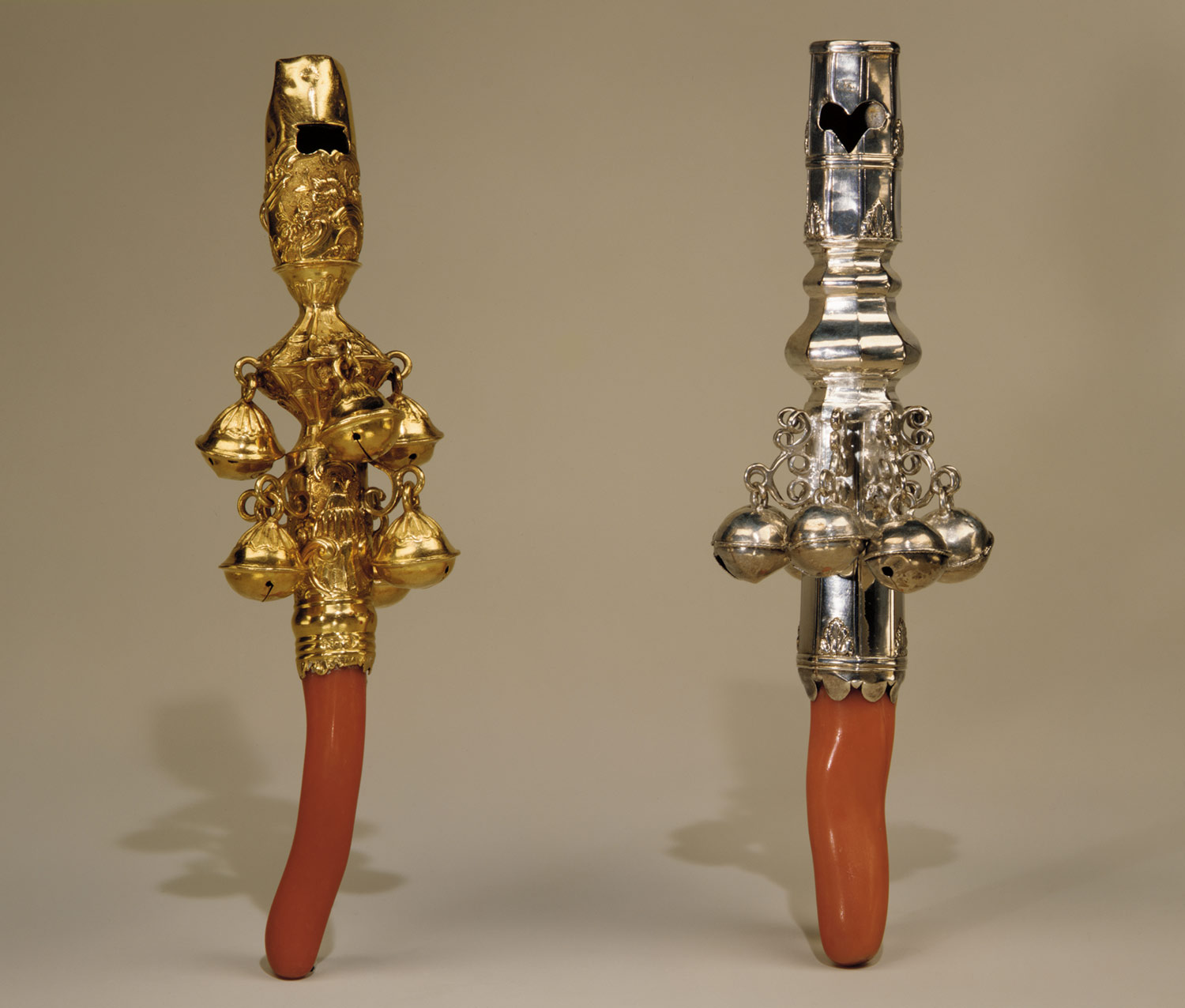
Gold coral bells from the Metropolitan Museum of Art (Source: The Metropolitan Museum of Art)

We also looked at a gold ring, inscribed with a skull and the phrase "Memento Mori," "Remember Death." I got it stuck on my finger, like a pro. I also held a human femur to examine the polyethylene glycol that was used to replace the cells damaged by water that had pooled in the grave. Pieces of bone or wood that have been PEG'd are lighter than you would expect them to be, as the substance has leeched into and filled gaps caused by decay.

We were privileged to see a piece of slate found in "the John Smith well" (called such as it was dug under the direction of John Smith). Deep scratches have been left behind on the slate, and a team of archaeologists, scientists, and experts have been trying to decode the words and images left behind. Drawings of birds and human figures cover the slate, as well as the phrase "A minion of the finest sorte."

You can read more about the slate at Preservation Virginia's website or the article by National Geographic.

I don't think conservation is the career for me, since I don't think I could handle all the chemistry classes required for it. Nevertheless, I find it to be one of the most interesting parts of the field of archaeology.

Wednesday, June 16, 2010

The basics

So here's what this field school is about. I'm attending an archaeology field school at Historic Jamestowne in Virginia. We're excavating James Fort, the first permanent English settlement in the Americas. It's kind of a big deal. We're currently digging in one of the last unexplored spots in James Fort.

We start with shovels, and dig away the top level of grass and dirt. All of the digging is done across the square, not straight down. It's basically scraping away layers of dirt. When we get to the second layer, we usually start screening. We put the dirt in buckets and dump it on these mesh screens over wheelbarrows. Then we don some gloves and shuffle through the dirt, pressing it through the screen. The artifacts stay behind. About 3 layers down (if the grass is A, then this level is D), we start troweling. They spray a little water on the unit to keep the dust down, then get on our knees and scrape away the soil with a trowel. The dirt is scooped up and screened. I might go more into technique in another post. We dig from 8 in the morning until 4:30, with breaks every two hours or so.

We find artifacts all the time. I would say that the vast majority of what I've found are nails. I can't tell the age off-hand yet, but the archaeologists can. They can estimate the age by the style of nail. Square-headed nails are from a certain era, machine-made nails are from such and such period. I hope to be able to tell the difference by the end of the six weeks.

I've found a pipe stem or two, some bits of pottery, glass of various ages, and, of course, plastic. Nothing spectacular, but I'm not complaining. Other people have found more ornate artifacts. The site is full of artifacts. The staff archaeologists have said that they're used to finding 100 things per bucket. I'm finding maybe 10 per, but hopefully there will be more. The thing is, this is the first archaeology experience most of the students have so we really don't know that this is a small yield. We were squealing over nails at first, but now they are commonplace.

While most of our time is spent in the field, we all spend one day a week in the lab. There we wash and sort artifacts. I might like it more than the field, because everything is already dug up. Sorting is hard work, though. As time goes by, I'll get better at telling things apart, but it's kind of daunting right now. There are tiny pieces that you have to use a microscope to identify. Basically, we take a bag of artifacts, wash it, and put it on a rack to dry. We take the dry ones and sort them by hand, with piles for bones, glass, ceramics, etc. I think these piles are further sorted later down the line into more specific groups. The copper pile is sorted into copper scrap, aglets, rivets, tacks, etc. They use a tiny brush to paint a tiny number on everything later on. I think I'll be doing that next week.

This is week two of six and I'm looking to buy a camera, so look for more posts soon.